
She had almost finished.
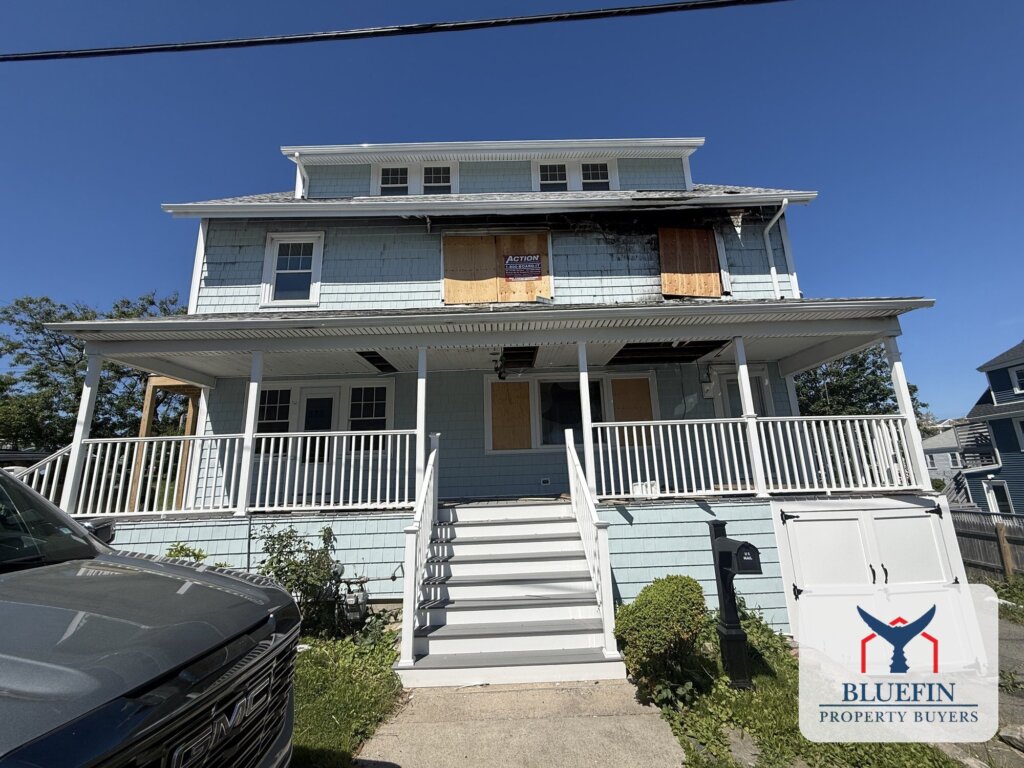
The house had belonged to her parents. She had spent years and a small fortune bringing it back — the exterior was immaculate, the kind of work you notice from the street. The kitchen was done. The bathrooms were done. Nearly every wall in the house had been re-plastered, which anyone who has done it will tell you is a long, dusty, expensive process that you only undertake when you intend to keep something.
Then there was a fire.
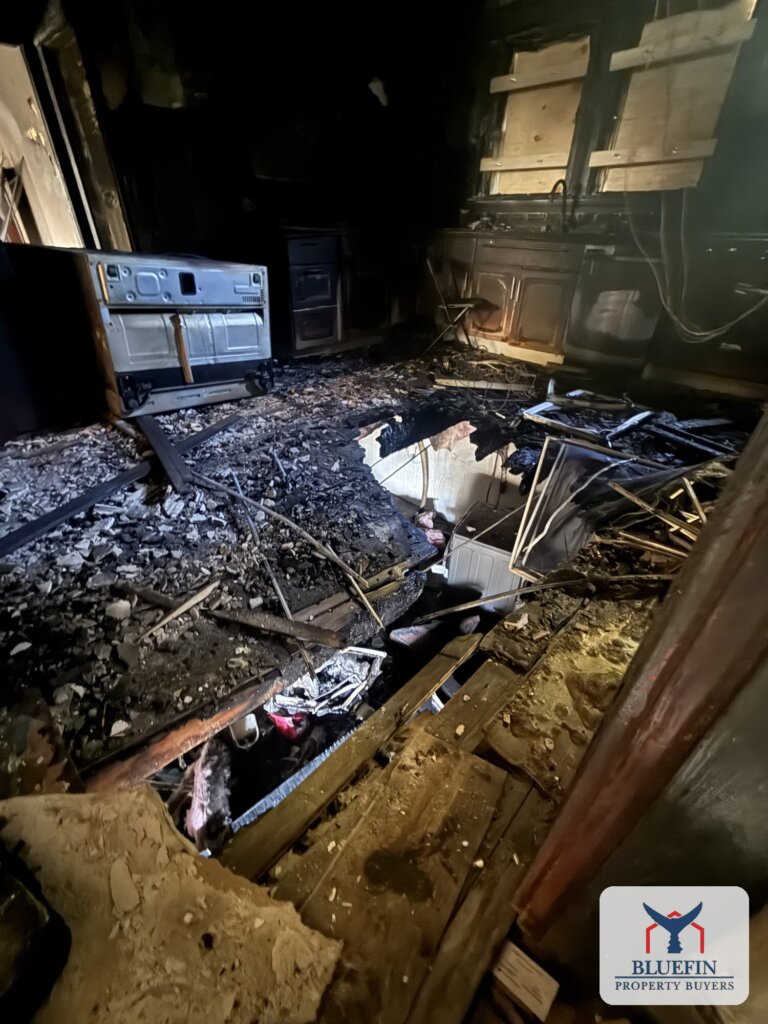
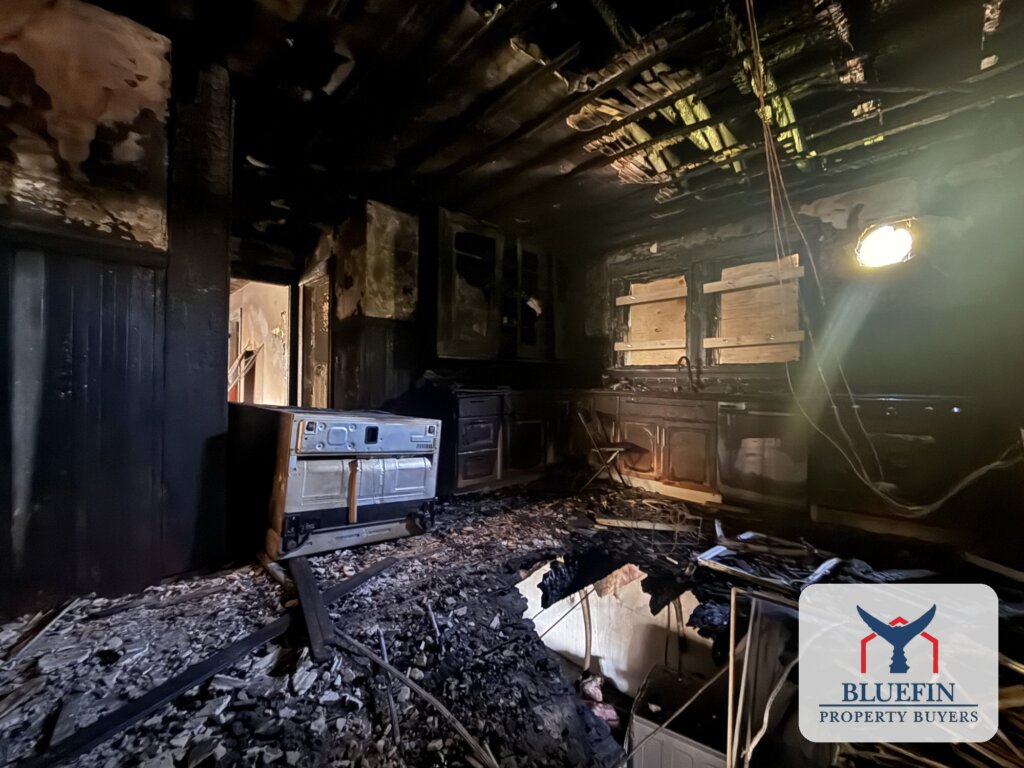
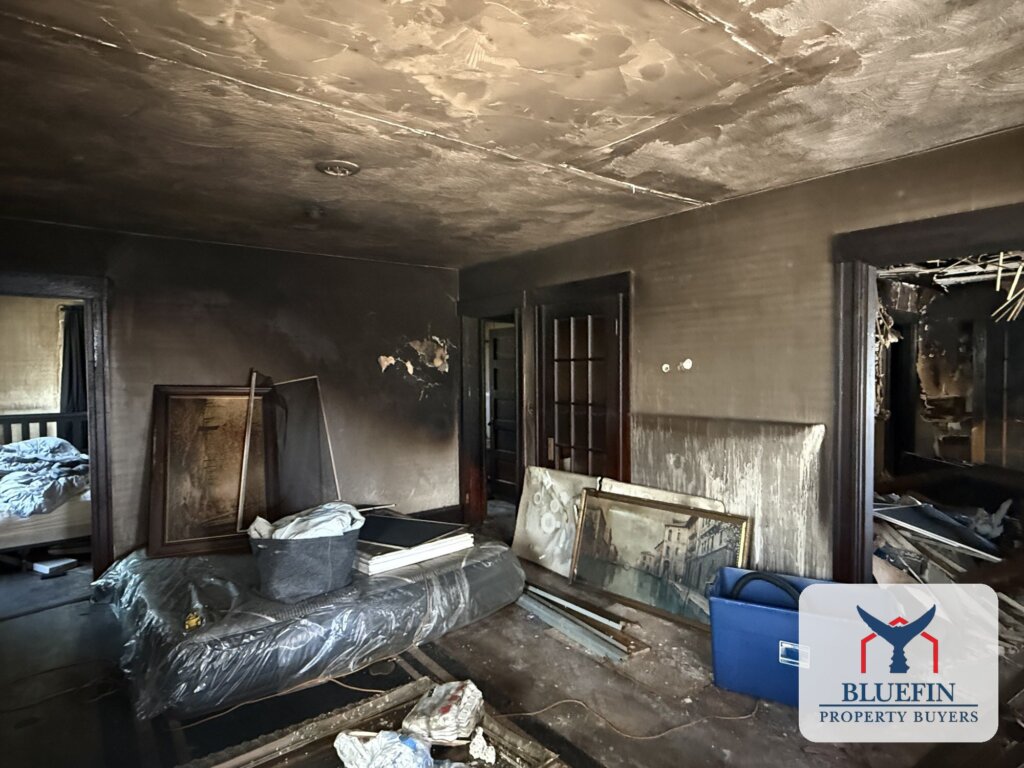
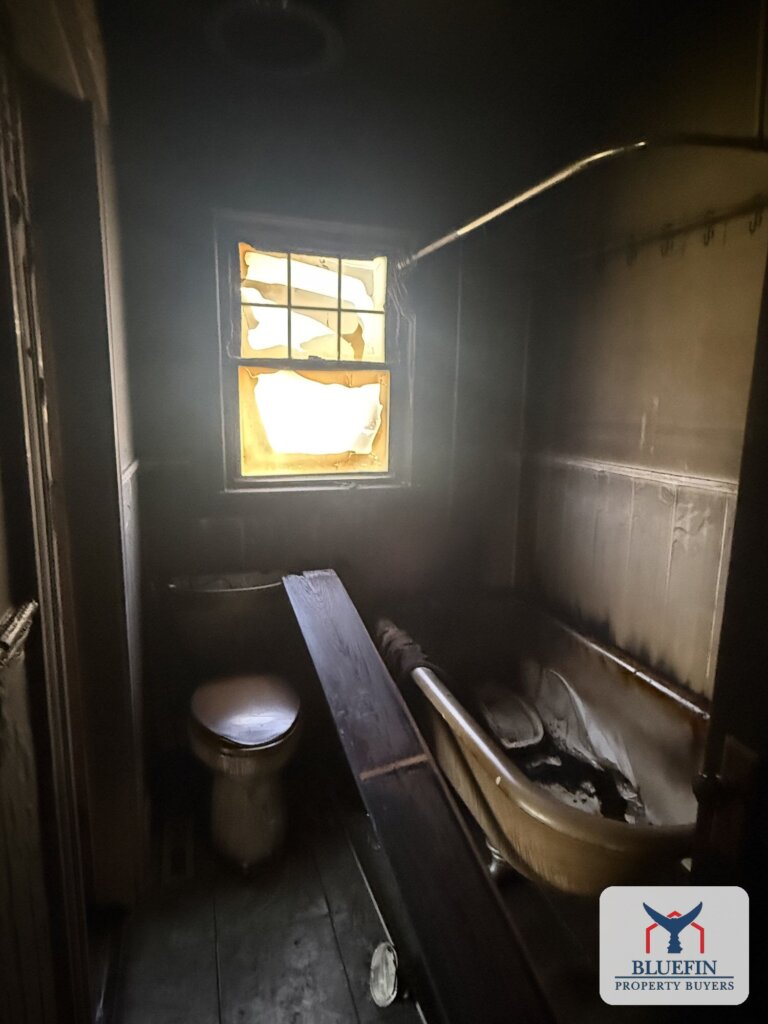
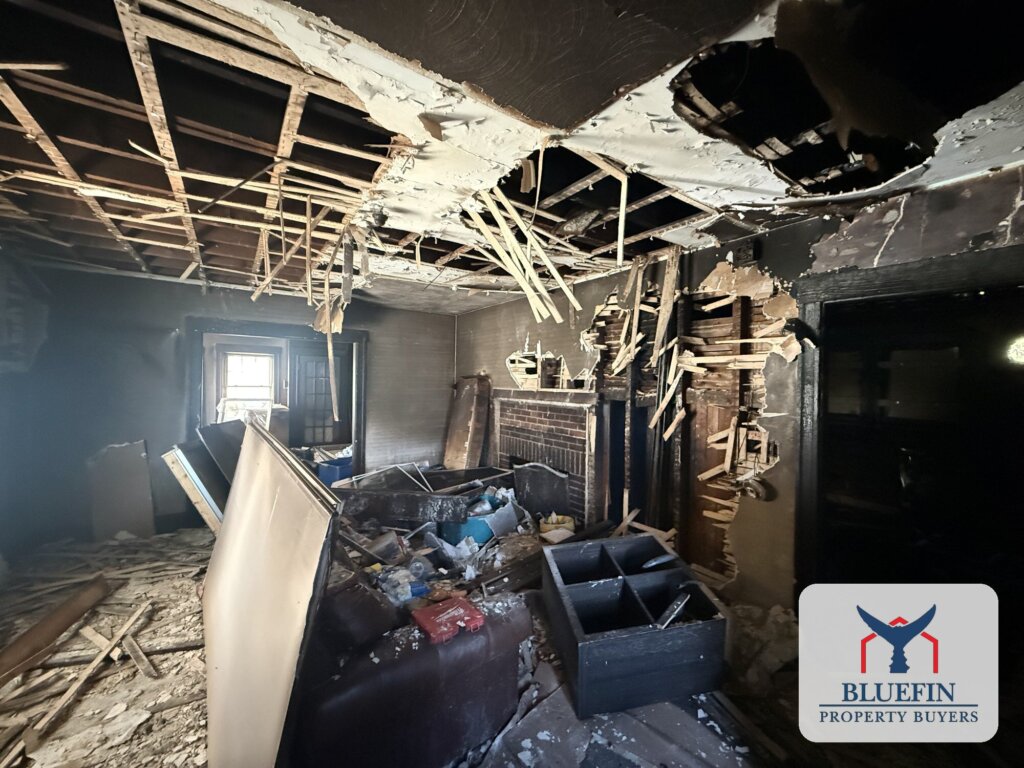
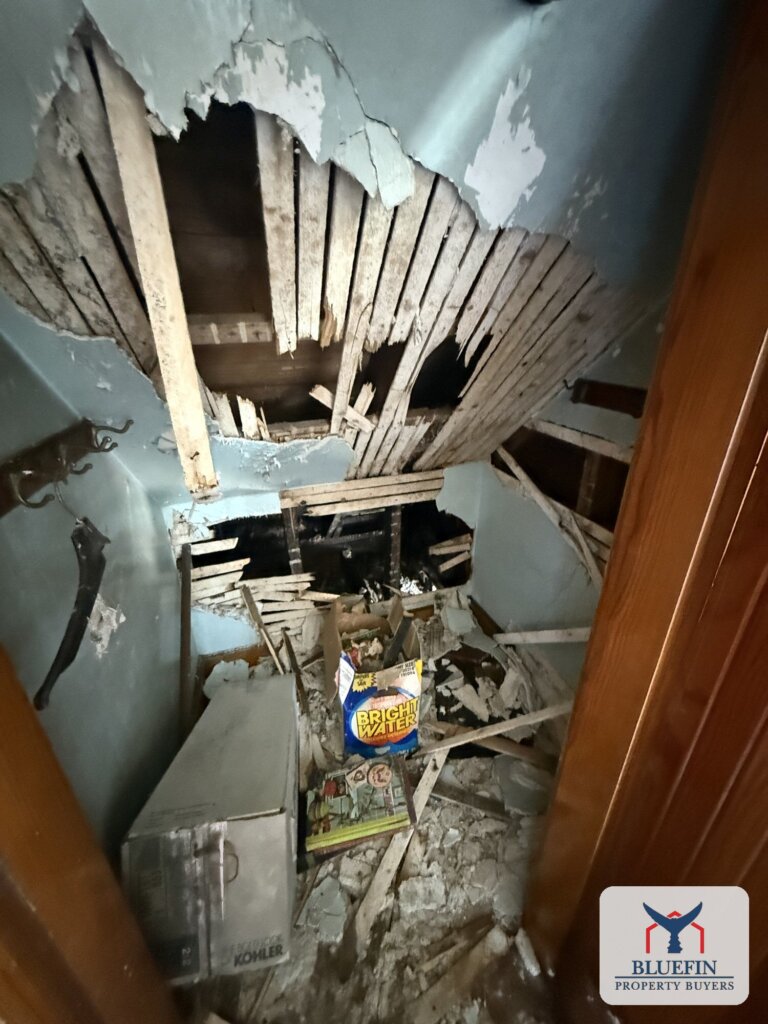
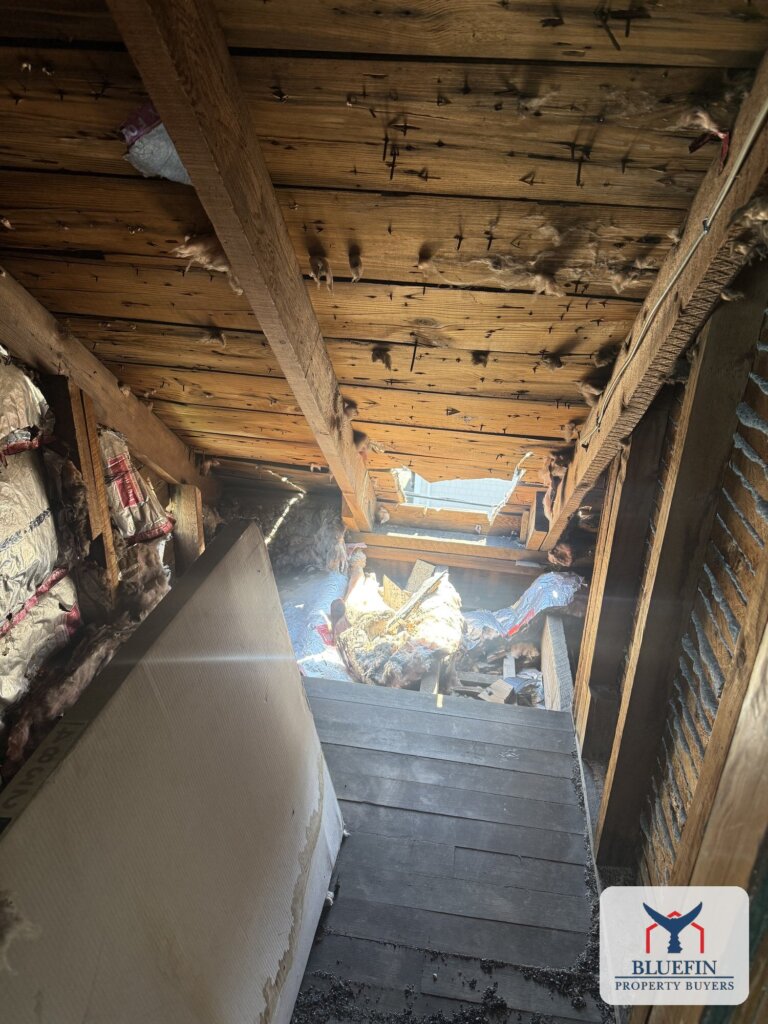
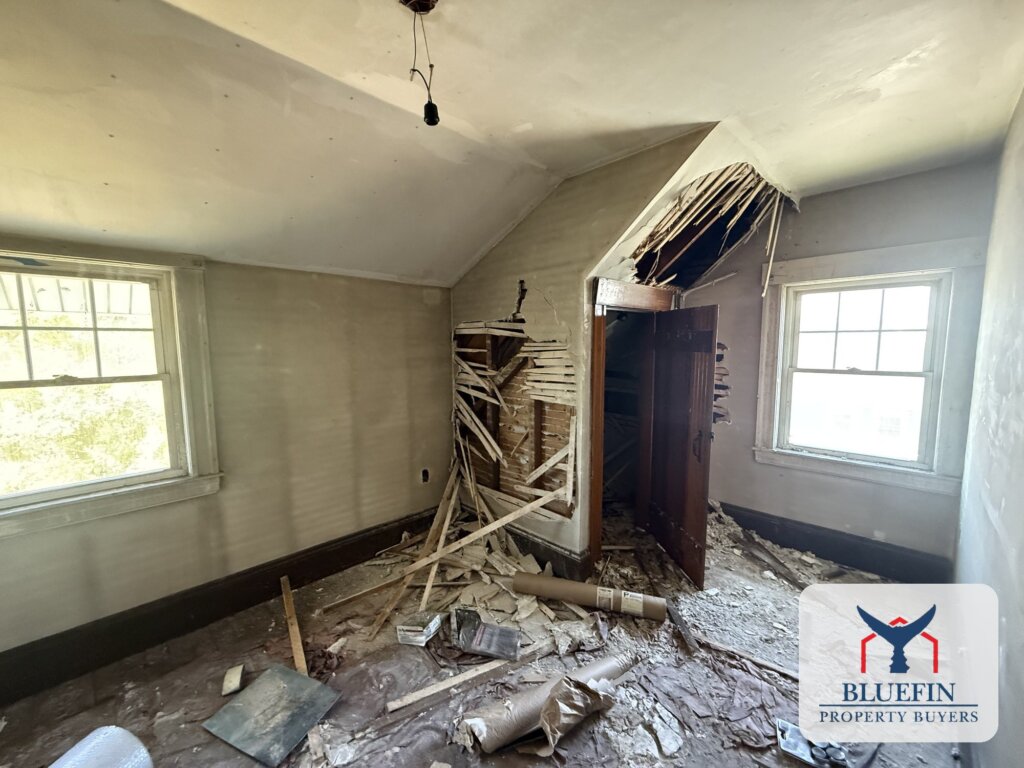
The kitchen floor burned through and collapsed into the basement. A firefighter went down with it and was injured. The finished rooms that never saw flame were coated in soot, and the smoke went into the framing, the ductwork and the new plaster.
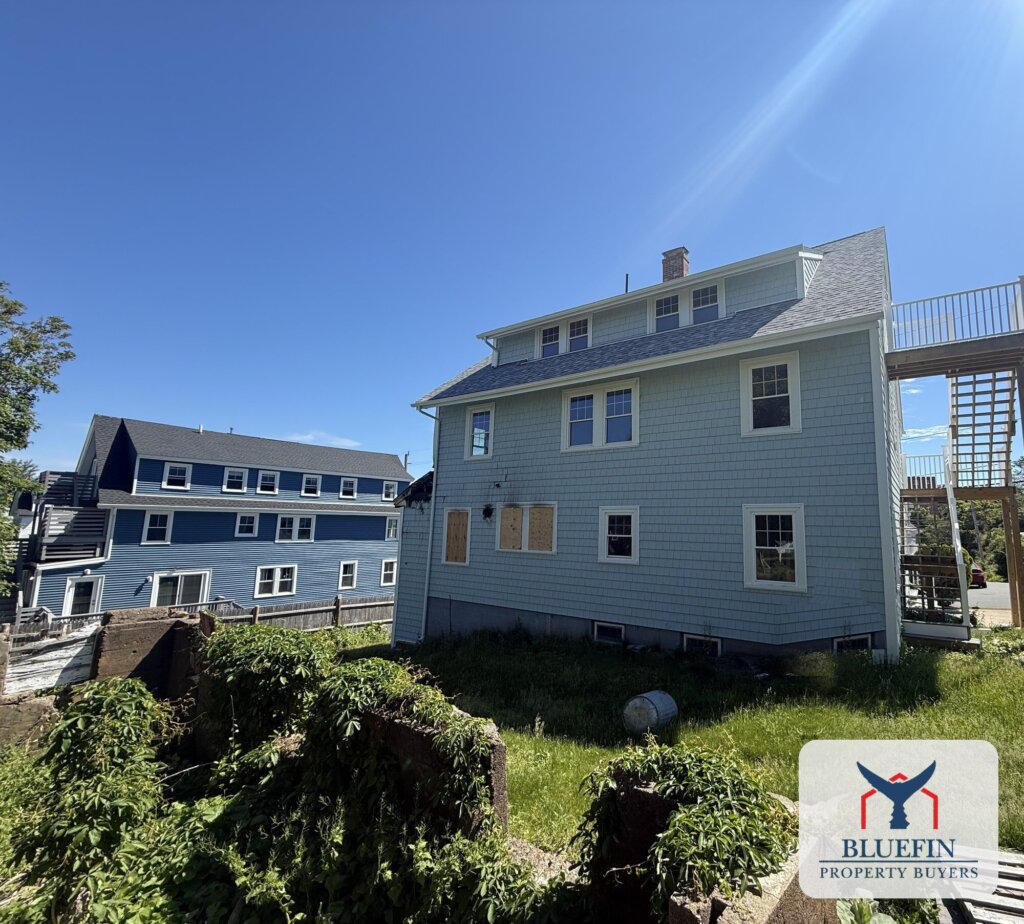
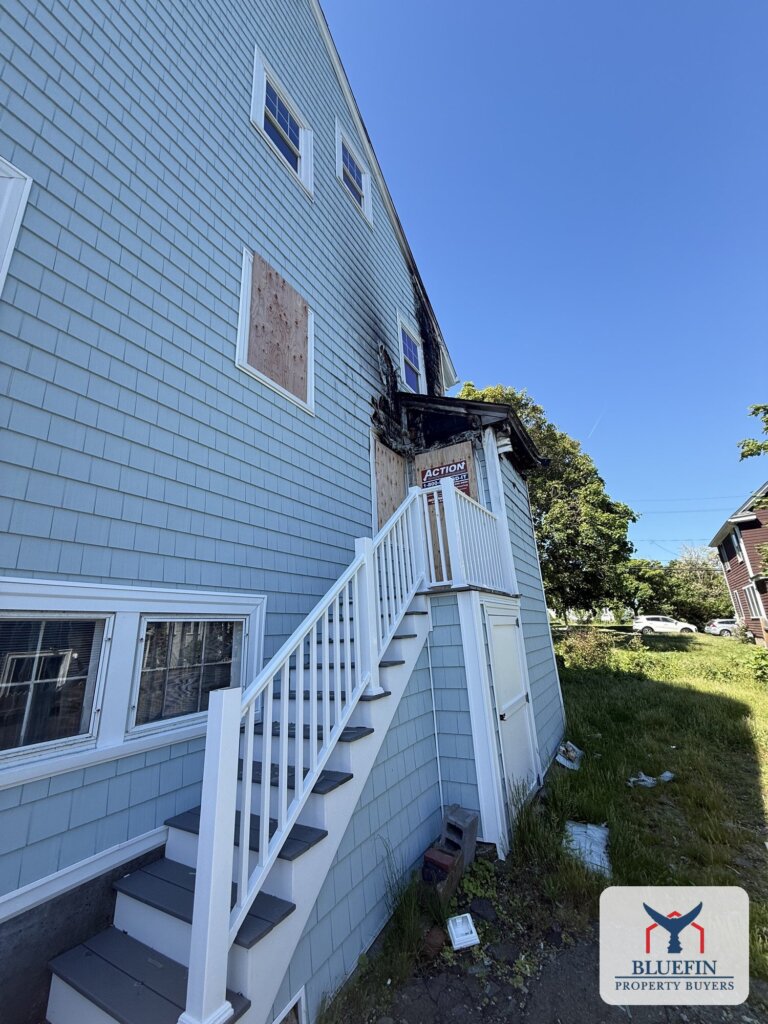
By the time I walked through it, the house was a different building than it had been the just months before — from the inside. From the sidewalk you could still see the glimpses of the near perfect renovation… That now is covered up with boards over windows and black burned out sections on the exterior…
If you are reading this, something like that has happened to you, and you are trying to figure out what you are supposed to do now. This covers the parts nobody explains: what the repairs actually cost, why an insurance check that gets approved still may not be yours to spend, what Massachusetts requires you to tell a buyer, why most buyers are not permitted to buy the house at all, and how to decide honestly between rebuilding it and selling it exactly as it stands.
Sell Your Massachusetts House Fast!
We buy houses in Massachusetts in ANY CONDITION! Get a CASH offer with no commissions, agents, or hidden fees. Just enter your property address and email below, and you could receive your cash offer within 24 hours!
Can You Sell a House With Fire Damage in Massachusetts?
es. No Massachusetts law requires you to repair a house before selling it. There is no minimum condition, no passing inspection, no habitability requirement. You can sell a house that is boarded up, gutted, partially burned, or structurally unsound.
What changes is your buyer pool and your number. Fire damage moves a house out of the financed retail market — where buyers bid against each other — and into the cash market, where a much smaller set of buyers competes on certainty instead.
Your real options are four:
- Rebuild completely, then list it on the open market
- Stabilize and clean it, then list it as-is, priced for the condition
- Sell it as-is to a cash buyer and close in a few weeks
- Wait — which is a decision, and usually the expensive one
Which is right depends on four things: whether insurance is paying and how much, whether you can access that money, how long you can carry the property, and whether you can run a construction project. Most of this article is about how to answer those honestly.
Fire Is the Rarest Big Claim and the Most Expensive One
Here is the shape of the thing, in numbers.
According to Insurance Information Institute data covering 2018 through 2022, fire and lightning claims average $83,991 — the most expensive common homeowners claim by a wide margin. For comparison, the water damage and freezing claims covered in our guide to selling a house with water damage in Massachusetts average $13,954.
The frequency runs the other way. Fire and lightning claims occur at 0.24 per 100 insured homes per year. Water and freezing claims run 1.61. So a fire is roughly one-seventh as likely and roughly six times as costly.
That combination is exactly why sellers are unprepared for it. Most people know somebody who has dealt with a burst pipe. Almost nobody has a friend who can walk them through a house fire.
What Massachusetts Fires Actually Look Like
The Massachusetts Department of Fire Services recorded 25,643 fires in 2023, including 15,264 structure fires, with an estimated $320.2 million in property loss.
The cause data is the part worth sitting with, because it explains why this happens to careful people in finished houses.
Cooking accounts for about 70% of residential building fires in Massachusetts, and roughly 73% of them start in the kitchen. Electrical faults are the leading cause of fatal fires. Heating and smoking follow.
Read that again in the context of a renovation. The kitchen is the room with the most new wiring, the most new appliances, the most recently disturbed framing, and the most activity while work is underway. It is also, statistically, where Massachusetts house fires begin.
Why a Floor That Looks Fine Is Not Fine
This is the section to give to anyone who tells you the damage “was only in the kitchen.”
When a fire burns in or under a floor, it attacks the framing from below, where nobody can see it. Underwriters Laboratories ran a test that makes the point better than any explanation: thermal imaging showed a comfortable 73°F on the surface of a floor while the space underneath it was at 1,378°F. Flooring and carpet insulate the top side. The joists carrying the load are being destroyed while the finish floor above still looks like a floor.
Which is why floor collapse is one of the ways firefighters get hurt in residential fires, and why it happened in this house. A firefighter went through the kitchen floor into the basement and was injured. Crews are trained to sound a floor before committing weight to it, and fire service literature is blunt that sounding is unreliable — a floor can read solid and fail seconds later.
For a seller, this has a direct and unwelcome consequence. Nobody can tell you what the house needs until an engineer and a demolition crew have opened it up. Not your contractor, not the adjuster, not the buyer’s inspector. Every estimate produced before that point is a guess, and with fire it is a guess that reliably moves in one direction.
Massachusetts housing stock makes this worse in specific ways. On the South Shore — and Hull in particular — a large share of houses are turn-of-the-century summer cottages converted to year-round use. Many were balloon-framed, meaning the wall cavities run uninterrupted from the sill to the attic with no firestopping, so fire that starts low travels vertically inside the walls to places that look untouched from the room you are standing in.
Smoke Is the Part That Ruins the Work You Already Did
This is the cruelest fact about a fire in a nearly finished renovation, and it is the one people refuse to believe until a restoration contractor walks them through it.
The rooms that did not burn are not undamaged.
Smoke goes everywhere the air goes. Soot from a structure fire is acidic and it keeps etching metal, glass and finishes for as long as it sits there. It settles into new plaster. It goes into the HVAC system and gets redistributed through the whole house every time the blower runs. Odor bonds into framing and subfloor, and it comes back on the first humid day after you think you have beaten it. Cleaning a surface is not the same as remediating it; remediation often means sealing framing with a specialty primer before anything goes back on the walls.
So the finished kitchen, the finished bathrooms, the plastered walls — the years of work — do not survive on the strength of having been in a different room. Some of it is salvageable. A lot of it is not, and the decision is made room by room by a contractor with a moisture meter and a soot swab, not by how good it looks at first glance.
What Fire Damage Costs to Repair in Massachusetts
Most articles on this topic will not give you numbers. Here are numbers, with the caveat that belongs on all of them: these are ranges from national restoration cost data, and the real figure for your house is not knowable until the walls are open.
| Scope | Typical range |
|---|---|
| Minor — one room, smoke and soot cleanup, odor treatment | $2,500 – $6,500 |
| Moderate — multiple rooms, soot plus firefighting water damage | $7,000 – $13,000 |
| Major — structural compromise and reconstruction | $16,000 – $26,000+ |
| Structural repairs, per room | $15,000 – $25,000 |
| Whole-house smoke and odor remediation | $2,000 – $12,000 |
| HVAC system decontamination | $250 – $1,200 |
| Full rebuild after a total loss | $100+ per square foot |
Three cost categories never appear on a restoration estimate and catch almost everyone:
- Firefighting water. The fire is put out with water, and that water goes into the floors below, the basement and the framing. Mold begins in 24 to 48 hours. You now own a water loss on top of a fire loss.
- Code compliance. Massachusetts distinguishes between repairing a building and reconstructing it. Like-for-like repair generally does not trigger an upgrade. Once the work crosses into reconstruction, the reconstructed portion has to meet the current code — and on a house built around 1900, current code is a long way from what is in the walls. Your building department is the only authority on where your project lands, and that conversation should happen before you sign a contract, not after.
- Carrying costs. Mortgage, taxes, utilities and a vacant-property insurance premium, every month the job runs. A fire rebuild is not a four-month project.
Your Insurance Will Probably Pay. That Is Not the Same as Having the Money.
Fire is a covered peril under essentially every standard homeowners policy. Unlike frozen pipes in a vacant house, which run headlong into a freezing exclusion, a fire claim usually gets paid.
Which is why sellers are so surprised by what happens next.
The mortgage company is on the check
If there is a loan on the property, your lender is named on the claim draft alongside you, and the check goes to their loss draft department, not to your bank account. They deposit it and release it in stages against completed work — a common structure is roughly a third up front, a third at verified 50% completion, and a third at the end, with an inspection before each release.
The logic is not sinister. The lender’s collateral just burned, and they want it rebuilt. But the practical effect is that a homeowner with an approved $150,000 claim may have almost none of it available, and cannot pay a contractor’s deposit with money they have not been given.
Call the loss draft department before you plan around a single dollar of that settlement. Ask specifically what happens to the balance if you sell the property instead of rebuilding it. The answer varies by servicer and by loan, and it is the single most important thing to find out early.
The renovation you just finished may not be insured
This one is specific to the situation in this house, and it is the hardest conversation to have with an owner.
Your dwelling coverage limit is a number set at some point in the past. If you then put a new kitchen, new bathrooms, new systems and new plaster into the house and never told your carrier, the policy still pays against the old limit. The improvements are real; the coverage is not.
This is not a rare oversight. The Mortgage Bankers Association has put the share of underinsured U.S. homes at over two thirds, and construction costs have moved sharply — one industry figure has average single-family construction at $162 per square foot in 2024 against $80 in 2011. A limit set even a few years ago can be badly short today, before you add unreported improvements on top.
Check two things on your declarations page: the dwelling coverage limit, and whether you have replacement cost or actual cash value coverage. Replacement cost pays what it costs to rebuild now. Actual cash value subtracts depreciation, and on a major loss the gap between the two is enormous. Some policies carry an extended replacement cost provision that adds a buffer above the stated limit. Many do not.
If the number comes back wrong
Get the denial or the shortfall in writing with the specific policy provision cited. Get the fire department’s incident report. Consider a licensed public adjuster before you accept a figure on a loss this size — they work on a percentage of what they recover, and a fire claim is where that math most often favors the homeowner. None of this is legal advice, and on a claim in the tens or hundreds of thousands it is worth an hour with a Massachusetts attorney who handles insurance disputes.
Keep the Settlement. Sell the House. Let Somebody Else Rebuild It.
Here is the option most Massachusetts sellers never hear about.
Nothing in a standard homeowners policy requires you to spend a settlement rebuilding the house, and nothing requires you to keep the house. Subject to the loss draft question above, you can collect the insurance money, sell the fire-damaged house as-is to a cash buyer, and keep both. You walk away with the settlement plus the sale proceeds, and the year of demolition, engineering, permitting, contractors and change orders becomes somebody else’s project.
That is what we do. Bluefin Property Buyers buys in genuinely as-is condition — we do not ask you to board it up, clean it out, remediate the smoke, replace the framing, or remove a single thing. We buy it burned, with the contents still in it.
Two things to get straight before you count on this:
- Confirm with the loss draft department what happens to undisbursed funds on a sale. Some servicers release the balance to the borrower once the loan is paid off at closing. Some apply it to the payoff. You need your servicer’s answer, not a general one.
- Tell your buyer. A cash buyer prices the house on its condition, not on whether a claim was paid — so keeping the settlement costs you nothing at the table. Concealing a claim from a buyer’s attorney is a different story. We price it the same either way.
Do You Have to Disclose a Fire When Selling a House in Massachusetts?
General information, not legal advice. Talk to a Massachusetts real estate attorney about your situation.
Massachusetts is a caveat emptor state. There is no mandatory statewide seller disclosure form, and a private seller generally has no affirmative duty to volunteer every defect.
That is where it stops being simple.
You cannot conceal and you cannot mislead. Painting over smoke staining, replacing a section of floor without addressing what is under it, or giving a half-true answer to a direct question moves you from “did not volunteer” into misrepresentation.
Chapter 93A is the real exposure. The Massachusetts Consumer Protection Act lets a deceived buyer pursue damages, and for willful or knowing conduct, multiple damages plus attorney’s fees.
Your agent has a duty you do not. Massachusetts licensees must disclose known material defects whether or not the buyer asks.
And here is the part that is specific to fire, and that sellers consistently underestimate: a house fire is a matter of public record and usually a matter of public knowledge. The fire department generated an incident report. The response was visible to every neighbor on the street. Local news covers residential fires routinely, and those articles are indexed and searchable by address forever. A buyer’s attorney will find it. The idea of quietly not mentioning a fire is not a strategy — it is a liability with a timer on it.
Disclose it in writing, attach the incident report and the remediation invoices, and price accordingly. That is not what costs sellers money. What costs sellers money is the buyer who discovers it at the inspection, stops believing anything else they were told, and either walks or re-trades the price by far more than the disclosure would have.
Why Most Buyers Cannot Buy Your House
Fire-damaged houses sit for a mechanical reason, not an emotional one. It is not that buyers dislike the house. Most of them are not permitted to buy it.
A financed buyer brings an appraiser who works for the lender. Active fire damage, missing structure or an open hole in a floor produces an appraisal “subject to repairs” — the loan cannot fund until the work is done and re-inspected, which means the work has to be paid for by somebody who does not own the house yet. That deal is dead. FHA and VA are stricter still.
Underneath that sits the quieter killer: the buyer must be able to bind homeowners insurance to close the loan. Carriers routinely decline to write a policy on a house with unrepaired fire damage, and a recent large fire loss reported to the CLUE loss-history database follows the property. No policy, no loan, no closing.
Which leaves cash buyers — not because cash is special, but because a cash buyer is the only buyer who does not need an appraiser, an underwriter and an insurance carrier to all agree the house is currently fine.
Selling a Fire-Damaged House in Hull and on the South Shore
Where the house sits changes the math, and Hull is a good illustration of why.
Hull is the softest negotiating market on the South Shore. In August 2026 the average Hull single-family home closed at 96.94% of asking — the only town in our monthly reporting that consistently sells below list, in fifteen of the last eighteen months. Homes that closed took 63 days, roughly 50% slower than the Massachusetts average. You can read the full picture in our Hull market report.
The reason is structural: Hull is a peninsula with a discretionary, seasonal buyer pool. Second-home buyers and retirees. Nobody has to buy in Hull, so buyers negotiate and buyers win.
Now put a fire-damaged house into that market. The buyers who could pay a strong price are the ones most able to walk away, and the ones who would take on the project are cash buyers who will price the project. Add the rest of the Hull profile — flood zone designations and elevation certificates that complicate financing, salt air, older cottages with knob-and-tube and undersized systems — and a fire-damaged listing there is not a house with a discount. It is a house without a conventional buyer.
The same logic runs, in milder form, through Quincy, Weymouth, Plymouth, Rockland and the rest of the South Shore: the older the housing stock, the further a fire rebuild travels from the estimate.
What to Do in the First 72 Hours
- Do not enter until the fire department releases the building, and do not walk on a floor over a basement that burned. That is not caution for its own sake — it is the specific failure mode described above.
- Open the claim immediately and ask the carrier for the adjuster’s name and the claim number in writing.
- Get the fire department’s incident report. Cause and origin drive the claim, the disclosure and any later dispute.
- Photograph everything before anything is moved. Every room, wide and close. The collapsed areas, the soot lines, the exterior. These photos are your claim, your disclosure record and the basis of an accurate as-is offer.
- Secure and board up the property. A burned, open house attracts theft, squatters, weather and municipal attention, and an unsecured property can complicate the claim.
- Call the loss draft department if there is a mortgage. Ask the sell-instead-of-rebuild question on day one.
- Pull your declarations page and check the dwelling limit and whether you have replacement cost or actual cash value.
- Do not gut it yourself and do not throw anything out. Discarded material is discarded evidence, and improper demolition spreads soot into rooms that were containable.
If you already know you do not want to rebuild it, you can stop at the photographs and send them to us.
Your Options, Honestly Compared
| Option | Out of pocket | Timeline | Who carries the risk | Best when |
|---|---|---|---|---|
| Rebuild, then list | Whatever insurance does not cover | 6 – 18 months | You | Coverage is adequate, funds are accessible, and you can run a GC |
| Clean and stabilize, list as-is | $5,000 – $25,000 | 3 – 6 months | You | Damage was contained and no structure was lost |
| Sell as-is for cash | $0 | 2 – 3 weeks | The buyer | Structure was affected, funds are locked up, or you need certainty |
| Wait | Rising monthly | — | You | Almost never |
That last row earns its own sentence. A burned house is open to weather. Firefighting water is still in the framing. Soot is still etching. Every month a fire-damaged house sits, it gets worse and it costs more, and the next winter arrives with the building still open.
How We Price a Fire-Damaged House
There is no mystery to it, and you should expect any cash buyer to explain their number this plainly.
We start with what the house is worth finished in that neighborhood — not today’s value, the rebuilt value. From that we subtract the full rebuild budget, the carrying and closing costs across the length of the project, and a margin wide enough to absorb the scope growing after demolition, because with fire it always does.
What is left is the offer. If the fire was contained and cosmetic, that number lands close to a retail as-is price. If the structure is compromised, it will not, and no honest buyer will pretend otherwise.
What you do not pay for: agent commissions, repairs, board-up, the smoke and carbon monoxide certificate, the cleanout, the dumpster, or the months of taxes and insurance you would otherwise carry. We buy the house with the contents in it. Take what matters to you and leave the rest.
She Sold It. Just Not to Us.
We looked at the Hull house. We ran the numbers the way we always do — rebuilt value, full scope, carrying costs, and a margin wide enough for what demolition was going to turn up — and we told her what we could pay.
She sold it to somebody else.
That is worth saying plainly, because it is the part of this article that proves the rest of it. She did not rebuild it herself. She did not put it on the open market and wait for a financed buyer who was never coming. Faced with a collapsed floor, a soot-coated restoration and a claim in hand, she did the thing this entire article describes: she sold the house as-is to a buyer who took on the rebuild.
We were not that buyer, and that is fine. We are not trying to win every house we look at. If another buyer sees more in your property than we do, or moves faster, or simply pays more, take that offer. The point was never that you sell to us. The point is that you understand the choice in front of you before you make it, because most people in this position are making it for the first time, under pressure, with bad information.
What we would tell you is what we told her. Get more than one number. Make every buyer explain how they arrived at it. And be suspicious of any buyer who will not walk you through the math, because a cash offer on a fire-damaged house is a construction estimate wearing a purchase price. A buyer who will not show you the estimate is leaving themselves room to renegotiate after you have already signed.
Ready to Sell? Here’s What Happens Next
Bluefin Property Buyers buys houses across Massachusetts in any condition — fire, smoke, burst pipes, flooded basements, mold, failed septic, inherited, vacant, tenant-occupied, or several at once.
The process is the same one we use on every house, and you can read it in full on how we buy houses. You tell us about the property — address, what happened, and photos if you have them. We look at it, usually within a day. We give you a number and we explain exactly how we got there, including what we think the rebuild costs us. If we think listing it nets you more, we say so.
If you take the offer: no repairs, no board-up, no cleanout, no commissions, no appraisal, no inspection contingency, no financing that collapses three days before closing. You pick the closing date. If you have an insurance settlement and your servicer releases it, that money stays yours.
You have already dealt with enough. Get your cash offer and take the easy way out.
Frequently Asked Questions
Can I sell a house in Massachusetts that has fire damage and has not been repaired?
Yes. Massachusetts has no repair requirement for a home sale, and cash buyers purchase fire-damaged houses regularly, including ones with structural damage and open holes in floors. What you cannot do is hide it. Secure the property, get the fire department’s incident report, document everything with photographs, and disclose the fire in writing — then either price for the condition on the open market or sell as-is to a buyer who takes on the rebuild after closing.
Do I have to disclose a fire when selling a house in Massachusetts?
Massachusetts is a caveat emptor state with no mandatory seller disclosure form, so a private seller generally has no duty to volunteer every defect. But you may not conceal a defect or answer a direct question misleadingly, and doing so can expose you to Chapter 93A claims including multiple damages and attorney’s fees. Your listing agent is separately required to disclose known material defects. With a fire there is also no practical way to conceal it — the fire department generated a public incident report, the neighbors saw the response, and local news coverage of residential fires stays searchable by address indefinitely.
Why is my mortgage company holding my fire insurance check?
Because your lender is named on the claim draft alongside you and their collateral is what burned. The funds go to the servicer’s loss draft department, which deposits them and releases them in stages against completed work, typically with an inspection before each disbursement — commonly about a third up front, a third at verified halfway completion, and the balance at the end. This is why an approved claim does not mean accessible cash. Call the loss draft department early and ask specifically what happens to undisbursed funds if you sell the property rather than rebuild it, because the answer varies by servicer.
Can I keep the insurance money and still sell my fire-damaged house?
In most cases yes, and it is frequently the best outcome available. Nothing in a standard policy requires you to spend a settlement rebuilding, so you can keep the claim money and sell the damaged house as-is to a cash buyer. The complication is the mortgage: where a servicer holds funds in a loss draft account, some release the balance to the borrower once the loan is paid off at closing and others apply it to the payoff, so confirm your servicer’s position before planning around it. Tell your buyer what you are doing — a cash buyer prices on condition, not on whether a claim was paid.
Is smoke damage as serious as fire damage when selling a house?
It is more serious than most sellers expect, because smoke reaches rooms the fire never touched. Soot from a structure fire is acidic and continues damaging surfaces as long as it sits there, it circulates through the HVAC system, and odor bonds into framing and subfloor and returns in humid weather. Remediation frequently means sealing framing with a specialty primer before anything goes back on the walls, which is why recently completed renovations in unburned rooms often cannot simply be cleaned and kept. Whole-house smoke and odor remediation commonly runs $2,000 to $12,000 on its own, before any reconstruction.