
The house had been empty since the fall. The oil tank was low when the last person walked out, and nobody thought much about it — it was still warm out. Then the tank ran dry, the furnace shut down, the temperature inside the house dropped to whatever it was outside, and on some ordinary January night a copper line in an exterior wall froze solid and split open.
Then it thawed. And the water ran, and ran, and kept running — through the ceiling, down the walls, across the first floor, into the basement. For days. Maybe weeks.
If that story sounds familiar, you already know the part nobody prepared you for: the damage is almost never the hard part. Selling the house afterward is the hard part.
This guide covers what happens next — what the repairs actually cost, why your insurance company may not pay, what Massachusetts law requires you to tell a buyer, why mortgage lenders quietly disqualify most of your buyer pool, and the option most sellers don’t know they have: keep the insurance money, sell the house as-is, and let somebody else fight with the contractors.
Sell Your Massachusetts House Fast!
We buy houses in Massachusetts in ANY CONDITION! Get a CASH offer with no commissions, agents, or hidden fees. Just enter your property address and email below, and you could receive your cash offer within 24 hours!
Can You Sell a House With Water Damage in Massachusetts?
Yes. There is no law in Massachusetts that prevents you from selling a house with water damage, mold, a burst pipe, a flooded basement, or a ceiling on the floor. You do not have to repair anything first. You do not need a passing inspection. The house does not have to be habitable.
What changes is who can buy it, and what you’ll be paid. Water damage moves a house out of the retail market — where financed buyers compete on price — and into the as-is market, where cash buyers compete on speed and certainty instead.
You have three real paths:
- Restore it completely, then list it on the open market
- Stabilize it and list it as-is with an agent, priced for the condition
- Sell it as-is to a cash buyer and close in a couple of weeks
The right answer depends on four things: how much cash you can put into the house today, whether insurance is paying, how fast you need to be out from under it, and how much risk you’re willing to carry if the repairs go deeper than the estimate. They usually go deeper than the estimate.
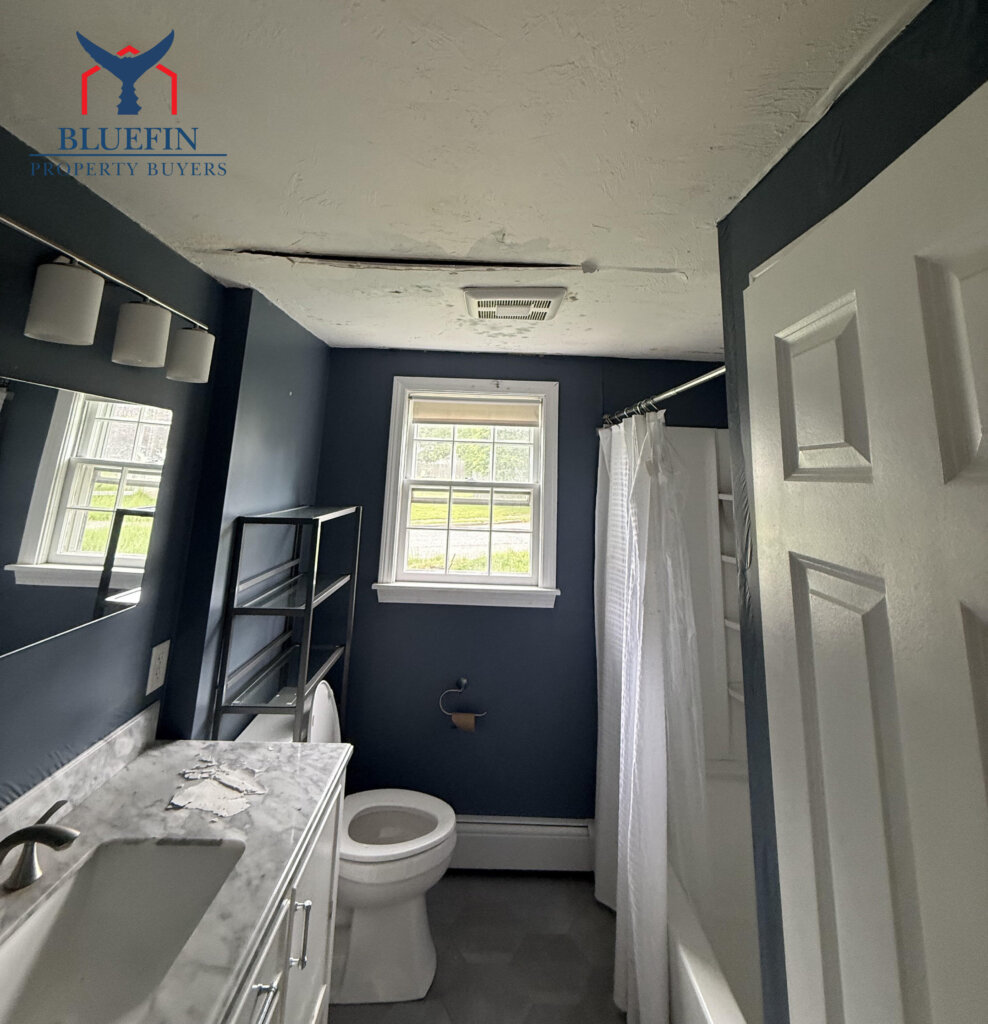
Why Frozen Pipes Are the Massachusetts Version of Water Damage
Florida has hurricanes. Texas has slab leaks. Massachusetts has February.
Three things stack up here in a way they don’t in most of the country, and together they make burst-pipe damage the most common catastrophic water event in this state’s housing stock.
First, our houses are old. The median Massachusetts home is roughly 59 years old, against a national median of about 42 — second-oldest in the country behind only New York, according to American Community Survey data. Old New England houses put plumbing in places no modern builder would: exterior wall cavities with almost no insulation, unheated crawl spaces, enclosed porches converted to bathrooms in 1978, fieldstone cellars that breathe cold air all winter.
Second, we heat with oil. About 572,000 Massachusetts households — roughly one in five — heat with fuel oil or kerosene. That matters enormously, because oil heat has a failure mode natural gas doesn’t: the tank runs out. A gas furnace in an empty house keeps running as long as the bill gets paid. An oil furnace in an empty house runs until the tank is dry and then simply stops, silently, with nobody there to hear it.
Third, we get genuinely dangerous cold. Pipes don’t fail at 32 degrees. The working rule most plumbers use is that an uninsulated line in an unheated space is at real risk below about 20°F, and roughly six hours at that temperature will do it. Massachusetts clears that bar several times every winter. In early February 2023, an arctic outbreak drove wind chills across the region to 45 and 50 below. Pipes burst at the Prudential Center, at the Wang Theatre, and at Boston Medical Center, where a frozen pipe let go in the emergency department and closed it for a day. If it happens to a hospital with a full facilities staff, it happens to an empty three-bedroom on a side street in Quincy or Plymouth.
Add it up and you get the scenario we see over and over: an inherited house waiting on probate, a rental between tenants, a home whose owner moved to a facility or spent the winter in Florida, a property in the middle of a divorce that nobody is checking on. Empty, unheated, and one cold night away from a very expensive spring.
What Actually Happens When a Pipe Freezes in an Empty House
Here’s the part most people get wrong: the pipe doesn’t burst because of the ice. It bursts because of pressure.
Water expands about 9% when it freezes. As an ice plug forms inside a line, it pushes water ahead of it toward a closed faucet, and pressure in that trapped section climbs until the weakest point in the pipe gives out. That’s why the split is often nowhere near the frozen section. And critically, the water usually doesn’t start pouring until the thaw — so the damage begins on the warm afternoon after the cold snap everybody was worried about.
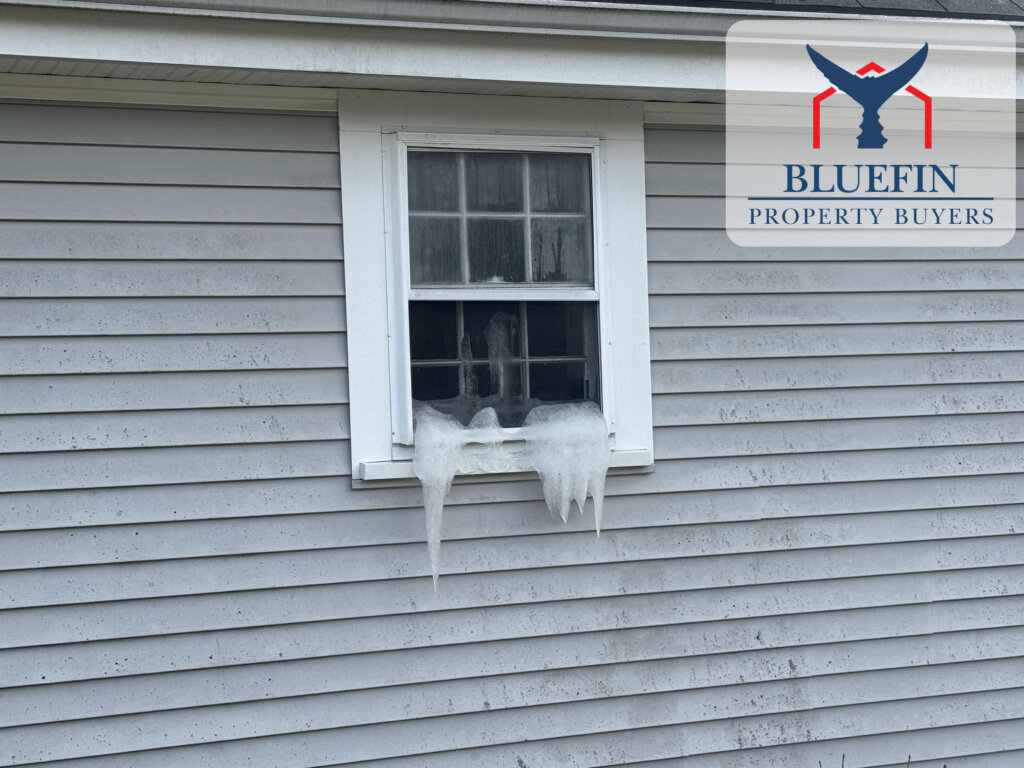
Then nothing stops it. In an occupied house somebody hears a hiss within minutes. In a vacant house the water runs at full main pressure until a meter reader, a mail carrier, a neighbor, or the town notices.
Restoration industry estimates put a burst half-inch supply line at up to 50 gallons a minute. Even at a deliberately conservative 10 gallons a minute, that’s 14,400 gallons in one day — more than a backyard swimming pool, dumped inside a closed house. Run that through a long weekend before anyone notices and you are well past the point where anything is salvageable.
What that water does, in rough order:
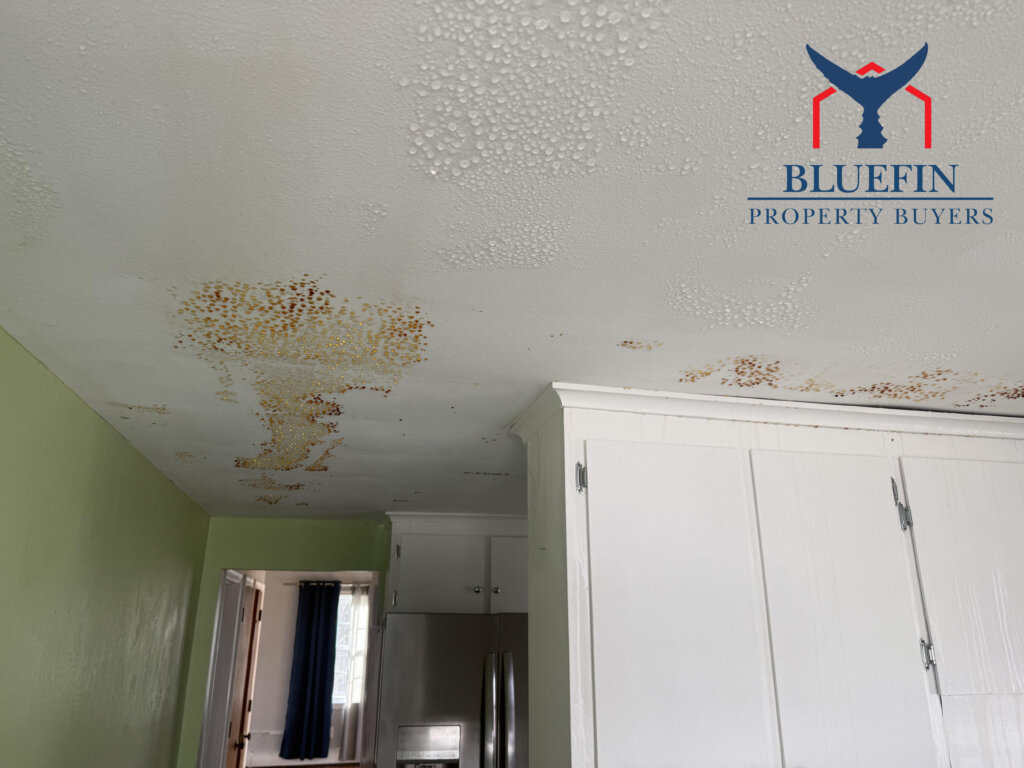
- Ceilings fail first. Saturated drywall gets heavy, loses its strength, and lets go — usually in whole sheets, and usually onto whatever was underneath it.
- Hardwood cups, then buckles. Site-finished oak — the thing Massachusetts buyers pay most for — is frequently a total loss within 48 hours.
- Mold starts in 24 to 48 hours. That’s the EPA’s own window for drying wet materials, and in a house nobody visits it’s missed by a mile.
- Kitchen cabinets swell and delaminate from the toe kick up, even when the finished faces still look fine.
- The heating system itself may be destroyed. If water in a boiler or baseboard loop froze, you’re replacing the system, not the split pipe.
- The water bill keeps running. In many Massachusetts towns an unpaid water and sewer balance becomes a municipal lien that must be cleared at closing.
The Insurance Problem Nobody Warns You About
Water damage is not a rare claim. Roughly one in every 60 insured homes files a water damage or freezing claim in a given year, and the average claim runs about $13,954, according to Insurance Information Institute data. Water is consistently one of the largest sources of homeowners claims in the country.
But standard homeowners policies contain a carve-out aimed at exactly the situation described at the top of this article. Language varies by carrier; a typical version excludes water escaping from plumbing “caused by freezing” unless the policyholder either (1) did their best to maintain heat in the building, or (2) shut off the water supply and drained the system when the heat wasn’t maintained.
Read that twice, because both halves matter. A vacant house with an empty oil tank is, in the carrier’s view, a house where neither condition was met. Courts have generally read “do your best to maintain heat” as requiring some affirmative effort rather than perfection — but an owner who let the tank run dry and never drained the lines has a real fight on their hands.
On top of that, most policies contain a vacancy provision that suspends or reduces certain coverages once a dwelling has been unoccupied for a set period, commonly 30 or 60 consecutive days. An inherited house sitting through probate crosses that line without anyone realizing the policy quietly changed.
If you get a denial: get it in writing with the specific policy provision cited, get a licensed plumber to put the cause and probable date of loss in writing, and consider a licensed public adjuster before you accept the number. Public adjusters generally work on a percentage of what they recover.
And know that the claim follows the house. Water losses are reported to the CLUE loss-history database, which the next buyer’s carrier can pull. A house with a recent large water loss can be harder or costlier for a buyer to insure — and no insurance means no mortgage.
Keep the Insurance Money. Sell the House. Let Somebody Else Do the Work.
Here is the move most Massachusetts sellers never hear about, and it’s the single most common way our sellers come out ahead.
If your carrier does pay the claim, that check is yours. Nothing in your policy requires you to spend it rebuilding the house. And nothing requires you to keep the house at all.
So you can do this instead: collect the insurance settlement, then sell the damaged house as-is to a cash buyer, and keep both. You walk away with the claim money plus the sale proceeds, and the four-to-eight-month reconstruction project — the contractors, the permits, the change orders, the surprises behind the walls — becomes somebody else’s problem entirely. That somebody is us.
This is exactly what we do. We buy in as-is condition, which is not a marketing phrase but a literal description: we do not ask you to fix the pipe, dry the house, remediate the mold, replace the ceilings, pull the cabinets, clean it out, or haul away a single thing. We buy it wet, mold and all, with the furniture still in it.
Two things to check before you plan around this:
- If there’s a mortgage on the property, the lender is usually named on the claim check and controls how it’s released — often in draws against completed work. Call the loss-draft department before you count that money as spendable.
- Tell your buyer what you’re doing. A cash buyer prices the house on its condition, not on whether a claim was paid, so keeping the settlement is not a problem — but hiding a claim from a buyer’s attorney becomes one. Be straightforward. We price the house the same either way.
If your claim was denied, the same logic applies with even more force. You’re now looking at funding a full rebuild out of your own pocket to chase a retail sale price, and the gap between what you’d net there and what you’d net selling as-is is almost never as wide as people expect — because of what comes next.
The Part Everyone Underestimates: Managing the Contractors
When people compare “fix it and list it” against “sell it as-is,” they compare two numbers: the repair estimate and the cash offer. That comparison is wrong, because the repair estimate is not a price. It’s a guess made before anyone has opened a wall.
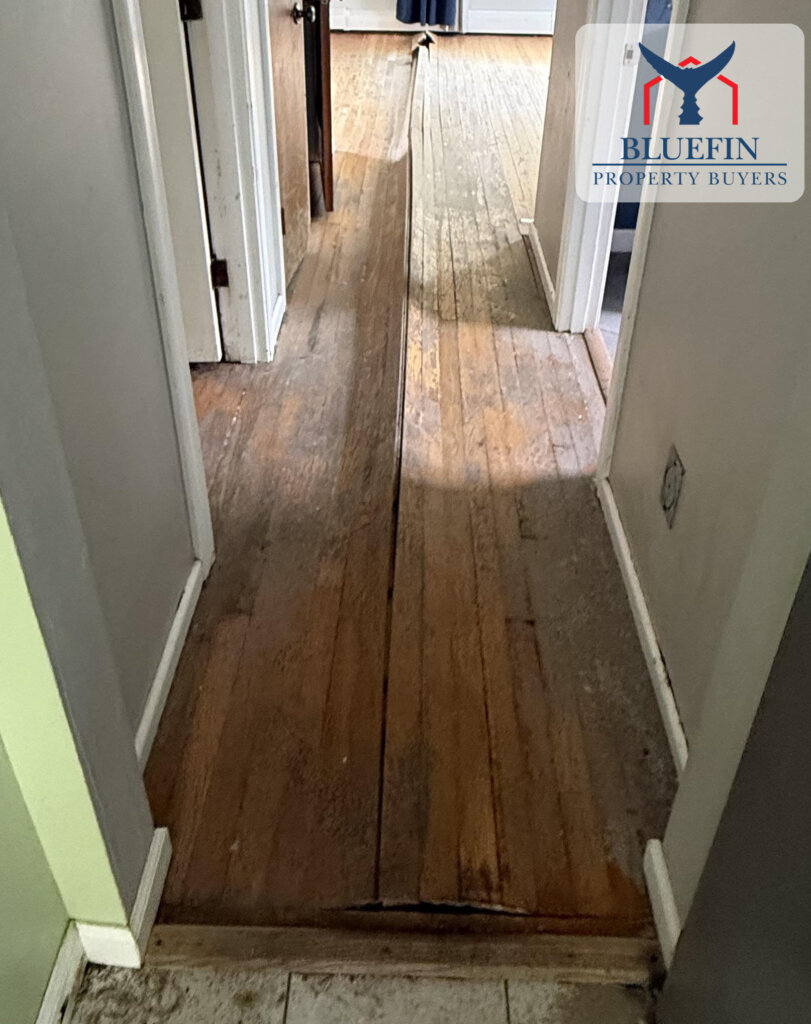
Water damage is the worst category of construction work for budget certainty, for a specific reason: you cannot see the scope until demolition is finished. A restoration contractor quotes you on visible damage. Then the drywall comes off and there’s mold on the framing in the next room. Then the flooring comes up and the subfloor is soft. Then the plumber finds three more split fittings in a joist bay nobody checked. Every one of those is a change order, and every change order is money you didn’t budget and time you didn’t plan for.
And here is a painful reality for the cost of building in Massachusetts. The second that drywall comes off, a homeowner is required to bring the house to todays building standards. That means new insulation, new electric and in some towns even have to meet a new HERS rating due to some towns abiding by the Stretch Code. All of this means an even bigger premium in the property rehab.
And none of that touches the ordinary friction: getting three contractors to even show up and quote a mold job, waiting six to ten weeks for a start date during the busy season, building permits and inspections in whichever town the house sits in, sequencing a plumber against an electrician against a drywall crew against a flooring installer, and driving to the property to find out why nobody’s truck is there today.
Meanwhile you’re carrying the mortgage, the taxes, the utilities and a vacant-property insurance premium every month the job runs. Four months of carrying costs on a Massachusetts single-family runs into real money on its own.
You are, in other words, being asked to take on a general contractor’s job, a general contractor’s risk, and a general contractor’s timeline — in exchange for the chance at a higher sale price that a nervous retail buyer will then try to negotiate back down at the home inspection.
That’s the trade. Some people should take it. Many shouldn’t.
What Does Water Damage Cost to Repair in Massachusetts?
Most articles on this subject refuse to give you numbers. Here are numbers.
One distinction to understand before you read any estimate: mitigation is not repair. Mitigation is the extraction, drying and dehumidification phase, and it runs somewhere between $3 and $12 per square foot depending on how contaminated the water is. Putting the house back together afterward — drywall, insulation, paint, trim, flooring — starts around $20 to $37 per square foot of affected area on top of that. A quote that sounds reassuringly cheap is usually only quoting the first half.
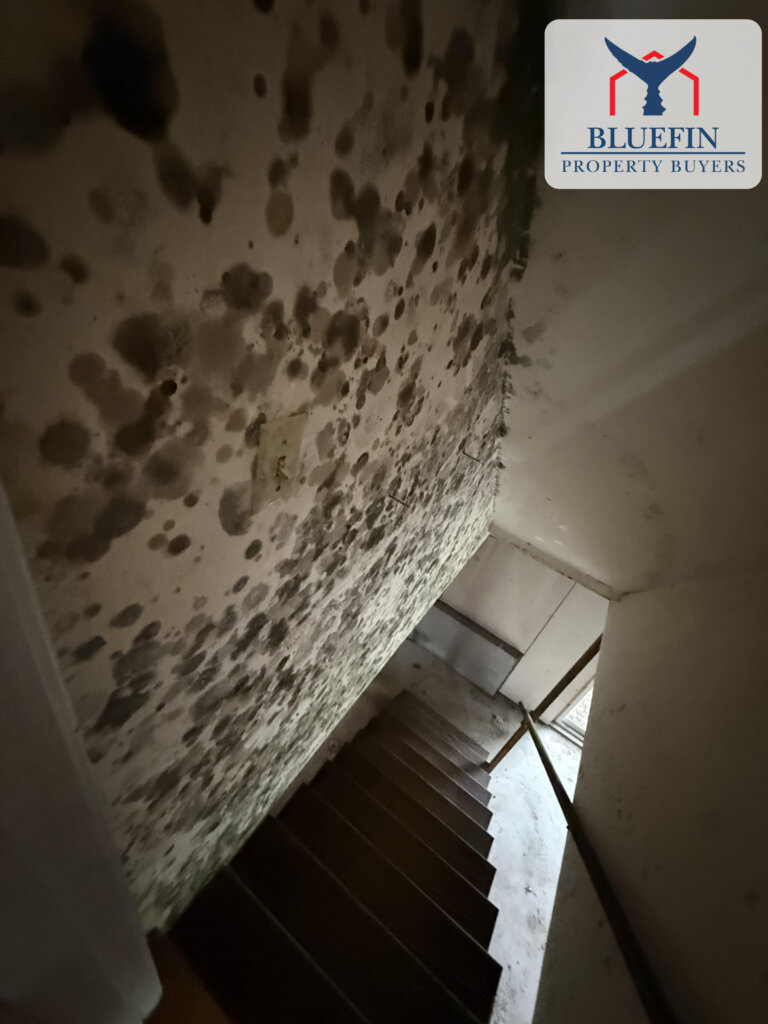
And a burst-pipe loss in a vacant house is rarely a one-room job. The realistic scope looks more like this:
| Line item | Typical range |
|---|---|
| Emergency mitigation and structural drying | $3,000 – $10,000 |
| Mold remediation (multi-room or whole-house) | $5,000 – $30,000 |
| Drywall, insulation, ceilings, paint | $8,000 – $25,000 |
| Flooring replacement | $6,000 – $20,000 |
| Kitchen cabinets and countertops | $8,000 – $30,000 |
| Re-pipe of failed plumbing lines | $4,000 – $15,000 |
| Boiler or furnace replacement if the system froze | $7,000 – $18,000 |
| Electrical repair where water reached panels or circuits | $2,000 – $10,000 |
Then there are the costs that never appear on a contractor’s estimate: carrying the mortgage, taxes and insurance through the project; the vacant-property premium your carrier wants once they learn nobody lives there; heating an empty house through the next winter so this doesn’t happen twice; and the money that materializes when the walls come open.
Do You Have to Disclose Water Damage When Selling a House in Massachusetts?
General information, not legal advice — talk to a Massachusetts real estate attorney about your specific situation.
Massachusetts is unusual here, and a lot of out-of-state advice on the internet is simply wrong when applied to this state.
Massachusetts is a caveat emptor — “buyer beware” — jurisdiction. There is no state-mandated seller disclosure form the way there is in Pennsylvania or Florida. A private seller generally has no affirmative duty to volunteer a list of every defect in the house.
That’s where the good news ends, because three other rules do a great deal of work:
You cannot conceal, and you cannot mislead. Actively hiding a defect — painting over a water stain, dropping a rug over a buckled floor, replacing a ceiling without addressing the leak above it — moves you out of “didn’t volunteer it” and into misrepresentation. So does a half-true answer. If a buyer asks whether the basement has ever taken on water, you have to answer honestly.
Chapter 93A is the real exposure. The Massachusetts Consumer Protection Act lets a deceived buyer pursue damages, and for willful or knowing conduct, multiple damages plus attorney’s fees. That is a substantially worse outcome than disclosing and pricing accordingly.
Your agent has a duty you don’t. Massachusetts real estate licensees must disclose known material defects to a buyer whether or not the buyer asks. Tell your listing agent about the burst pipe and your agent has to tell the buyer. There is no version of this where the damage stays quiet.
Two disclosures are mandatory regardless: lead paint for any home built before 1978, and Title 5 septic information for properties on private septic, which generally requires an inspection within two years of transfer.
The practical takeaway: disclosing water damage in writing, with the plumber’s report and mitigation invoices attached, isn’t what costs you money. It’s what protects you. What costs sellers money is the buyer who discovers it at the home inspection, stops believing anything else you said, and either walks or re-trades the price by more than the repair was ever worth.
Why Most Buyers Can’t Buy Your House, Even If They Want To
This is the mechanical reason water-damaged houses sit, and it has nothing to do with taste. It isn’t that buyers dislike the house. It’s that most of them are not permitted to buy it.
Most buyers need a mortgage, and a mortgage brings an appraiser who works for the lender, not for you. When that appraiser sees active water damage, missing ceilings, or visible mold, the appraisal comes back “subject to repairs” — the loan cannot fund until the work is done and re-inspected. Which means the work has to be paid for by someone who doesn’t own the house yet. That deal is dead.
FHA and VA loans are stricter still; both carry minimum property condition standards a house with an open water loss will not meet. And there’s a quieter killer underneath it all: the buyer must be able to bind homeowners insurance as a condition of the loan. Carriers routinely decline to write a policy on a house with unrepaired water damage or active mold. No policy, no loan, no closing.
Which leaves cash — not because cash is glamorous, but because a cash buyer is the only buyer whose purchase doesn’t require an appraiser, an underwriter and an insurance carrier to all agree the house is currently fine. That gap is the entire reason cash home buyers in Massachusetts exist.
Your Four Options, Honestly Compared
| Option | Money out of pocket | Timeline | Who carries the risk | Best when |
|---|---|---|---|---|
| Fully restore, then list | $25,000 – $100,000+ | 4 – 8 months | You | Insurance is paying, you have reserves, and you can manage a GC |
| Mitigate, then list as-is | $3,000 – $15,000 | 2 – 5 months | You | Damage was caught early and is limited to one area |
| Sell as-is for cash | $0 | 2 – 3 weeks | The buyer | Damage is extensive, the house is vacant, or you need certainty |
| Do nothing for now | Rising monthly | — | You | Almost never |
That last row deserves a sentence of its own. Water damage is the rare property problem that compounds. Every month a wet house sits, mold spreads into material that was dry, framing that was merely damp begins to rot, and the next winter arrives with the heat still off and the lines still charged. The most expensive decision available to you is waiting until spring to deal with it.
What to Do in the First 72 Hours
- Shut the water main off and, if the house will stay unheated, have the system drained. Don’t skip the draining — a partially drained system freezes again.
- Kill the power to any circuit that got wet before you walk through.
- Reach out to a Restoration Company – A local company we recommend is: Bostonian Cleaning & Restoration
- Photograph everything before you touch anything. Wide shots of each room, close-ups of the split pipe, the water line on the walls, the thermostat, the empty oil tank gauge. These photos are your claim, your disclosure record, and the basis of an accurate as-is offer.
- Open an insurance claim even if you suspect it’ll be denied, and get a licensed plumber’s written report on the failed line and probable cause. A written denial is worth having; an unreported loss is worth nothing. And that plumber’s report does more work in a claim dispute than anything else you can produce.
- Don’t throw anything out, and don’t gut it yourself. Discarded material is discarded evidence, and improper demolition spreads mold spores through rooms that were fine — turning a contained problem into a whole-house one.
- Secure the property. Vacant, visibly damaged houses attract copper theft, squatters and municipal attention — each of which costs more than a lock.
If you already know you don’t want to rebuild it, you can stop at the photographs and send them to us. We can usually tell you a number from pictures and a walkthrough.
A Massachusetts Example: The House That Ran Out of Oil
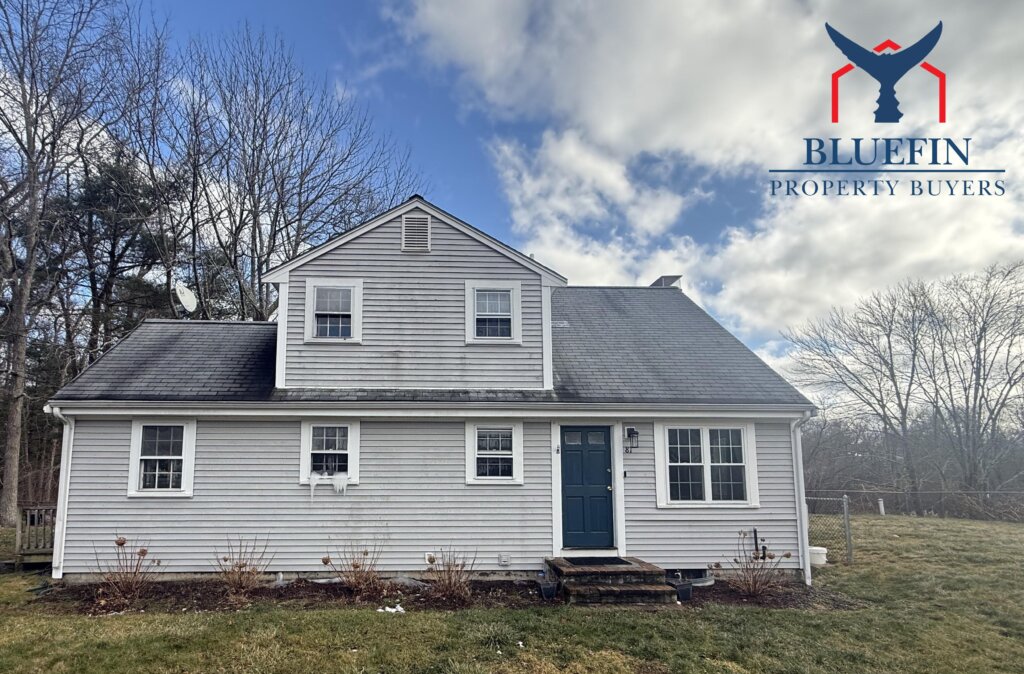
The house was a vacant single-family, heated by oil, empty through the fall while the family sorted out what to do with it. The tank ran dry sometime in early winter. With no heat, the interior temperature tracked the outdoor temperature, and during one of the cold stretches this state gets every January, the supply lines froze.
When they thawed, they split.
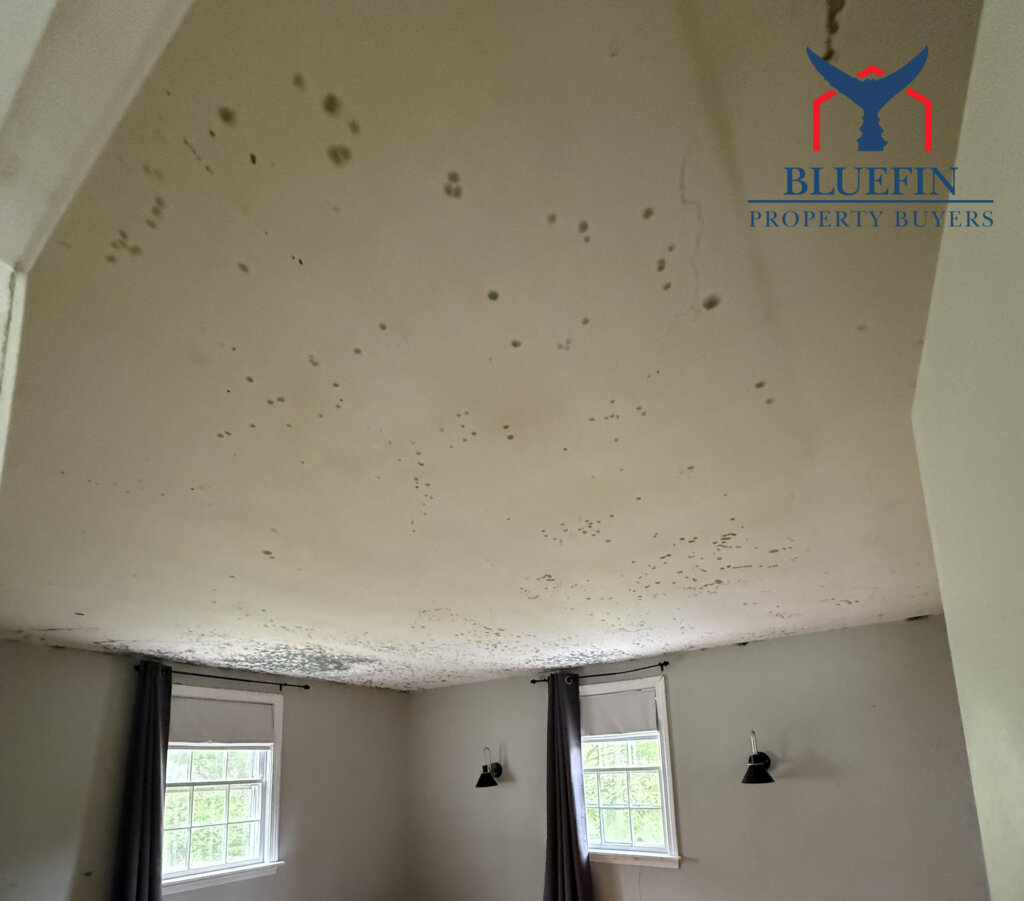
By the time anyone opened the door, water had been through two floors. Ceilings were down. Hardwood had cupped and lifted off the subfloor. Cabinets had swelled off their bases. There was mold on surfaces that were never wet before the pipe let go, because a sealed, damp house in the dark is the best mold incubator ever built.
On a traditional listing, this house has essentially no buyer. No appraiser signs off, no carrier insures it, no lender funds it. The owners’ realistic options were to fund a full restoration themselves and wait out a contractor’s schedule, or to sell it exactly as it stood.
We buy houses like this one because the work doesn’t frighten us and the math is something we do every week. The seller signed, we closed, and the rebuild — new plumbing, new mechanicals, new ceilings, new floors — became our problem instead of theirs.
How We Price a Water-Damaged House
There’s no mystery to it, and you should expect any cash buyer to explain their number this plainly.
We start with what the house is worth finished — not what it’s worth today, but what it sells for in that neighborhood once fully rebuilt. From that we subtract the full rebuild budget, the carrying and closing costs over the length of the project, and a margin large enough to absorb the scope growing after demolition, because with water damage it reliably does.
What’s left is the offer. If the damage is cosmetic and contained, that number lands close to a retail as-is price. If the house needs to come down to the studs, it won’t — and no honest buyer will pretend otherwise.
What you don’t pay for in a sale like this: agent commissions, repairs of any kind, the smoke and carbon monoxide certificate, the cleanout, the dumpster, the furniture nobody wants, or the months of taxes and insurance you’d otherwise carry while a contractor works. We buy the house with the contents in it. Take what matters to you and leave the rest.
Mistakes That Cost Massachusetts Sellers the Most
- Painting over the stain. Every home inspector in this state owns a moisture meter. You’re not hiding it; you’re converting a disclosure into a misrepresentation claim.
- Spending the insurance check on a rebuild you can’t finish. Half-finished work is worth less than no work at all — a buyer can price unknown damage, but can’t price unknown repairs of unknown quality. Running out of money at 60% complete is the worst possible place to stop.
- Taking a cash offer without asking how it was calculated. A buyer who can’t walk you through the math is a buyer who intends to renegotiate later.
Ready to Sell? Here’s What Happens When You Reach Out
Bluefin Property Buyers buys houses across Massachusetts in any condition — burst pipes, flooded basements, mold, fire damage, failed septic, inherited, vacant, tenant-occupied, or all of it at once.
The process is short, and it’s the same one we use on every house — you can read the whole thing on how we buy houses. You tell us about the property — address, what happened, and a few photos if you have them. We look at it, usually within a day. We give you a number and we explain exactly how we got there, including what we think it’ll cost us to fix. If we believe listing it would net you more than selling to us, we’ll tell you that, because we’d rather be honest than win a deal we shouldn’t.
If you take the offer: no repairs, no cleanout, no commissions, no appraisal, no inspection contingency, no financing that can fall apart three days before closing. You pick the closing date. If you have an insurance settlement, that money stays yours. You hand us the keys to a wet house and never think about a contractor’s schedule again.
You’ve already dealt with enough. Get your cash offer and take the easy way out.
Frequently Asked Questions
Can I sell a house in Massachusetts with a burst pipe that hasn’t been repaired?
Yes. Massachusetts has no repair requirement for a home sale, and cash buyers purchase houses with active or unrepaired water damage regularly. What you cannot do is hide it. Shut the water off, document the damage with photos and a plumber’s report, and disclose it in writing — then either price for the condition on the open market or sell as-is to a buyer who handles the repairs after closing.
Do I have to disclose water damage when selling a house in Massachusetts?
Massachusetts is a caveat emptor state with no mandatory seller disclosure form, so a private seller generally has no duty to volunteer every defect. But you may not conceal a defect or answer a direct question misleadingly, and doing so can expose you to Chapter 93A claims including multiple damages and attorney’s fees. Separately, your listing agent is required to disclose known material defects to a buyer whether or not you want them to. Disclosing in writing, with documentation attached, is the safer path.
Will my homeowners insurance cover frozen pipes in a vacant house?
Often not. Standard policies exclude water damage caused by freezing unless the owner used reasonable efforts to maintain heat in the building, or shut off the water supply and drained the system. A vacant house whose oil tank ran dry typically meets neither condition. Most policies also contain a vacancy provision limiting coverage after 30 or 60 consecutive days unoccupied. File the claim anyway, get any denial in writing with the cited provision, and consider a licensed public adjuster before accepting the outcome.
Can I keep the insurance payout and still sell my water-damaged house?
In most cases yes, and it is one of the better outcomes available to a Massachusetts seller. Nothing in a standard policy requires you to spend a settlement rebuilding the home, so you can keep the claim money and sell the damaged house as-is to a cash buyer, keeping both. The exception is when a mortgage lender is named on the check, in which case the loss-draft department usually releases funds in draws against completed work — call them before you plan around it. Tell your buyer what you’re doing; a cash buyer prices on condition, not on whether a claim was paid.
Is it cheaper to repair the water damage or sell the house as-is?
Repairing generally nets more if three things are true: insurance is funding a meaningful share, you have the cash to carry the property for four to eight months, and you can absorb the scope growing after demolition. On a vacant burst-pipe loss, usually none of the three hold. Between change orders, contractor scheduling, carrying costs, and the price re-trades a nervous retail buyer will attempt at the home inspection, selling as-is frequently nets the same or more with none of the risk and none of the waiting.